If you manage a property in Utah, you already juggle a lot. ADA compliance for your parking lot may be the last thing on your mind, but it shouldn’t be. ADA parking lot compliance isn’t just a box to check to avoid fines; it’s an important aspect of property management that shouldn’t be forgotten. But figuring out what “compliant” actually means can feel like decoding a rulebook. In this post, we answer the questions property owners ask most, simplifying the ADA compliance process. By the end, you’ll know exactly what to review on your property and how to partner with the right crew to get it done quickly and correctly.
What Is ADA Parking Lot Compliance?
The Americans with Disabilities Act (ADA) was created so that people with disabilities have equal access to public and commercial spaces. For property owners, that starts before anyone even steps inside the building. A parking lot that isn’t accessible makes every other part of your facility less accessible, too.
Who Must Comply?
The ADA applies to almost every property open to the public. This includes retail centers, restaurants, medical offices, apartment complexes, and government buildings. Even private lots that allow public access are included. Noncompliance is more than just a legal issue: it can mean fines, lawsuits, or required reconstruction at your own cost.
Local jurisdictions, including those in Utah, may also have additional accessibility codes that expand federal ADA requirements. Property owners must understand both sets of rules to make sure their lot meets all applicable standards during inspections or renovations.
Why Parking Accessibility Matters
The goal of ADA parking standards is simple: make sure everyone can park and safely access the building. Properly marked/dimensioned accessible spaces prevent obstacles for wheelchair users and people with mobility aids. That includes leaving enough space beside a vehicle for lifts or ramps and creating stable walking paths with gentle slopes leading to entrances.
Without compliance, you risk creating barriers for some customers. You don’t want to make it difficult or impossible for people to use your property safely. It’s not only about checking legal boxes; it’s about making your property welcoming and inclusive for every visitor.
Layout & Dimensions for ADA Lots
A compliant layout is about far more than adding a few blue-painted symbols. Every detail from stall width to signage height plays a role in accessibility and compliance.
Here’s what to know about ADA-compliant layout and design:
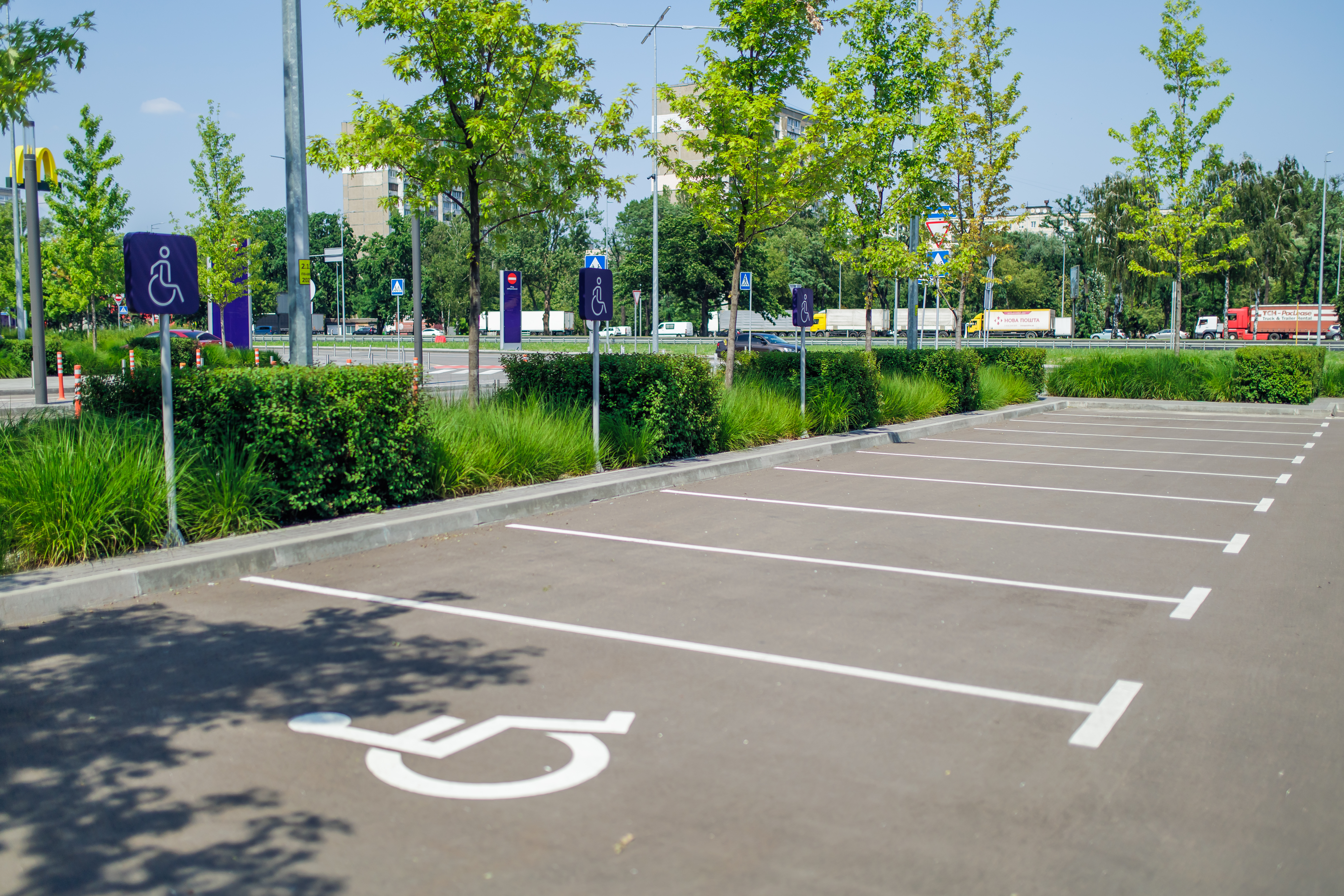
- Standard Accessible Spaces: Must be 8 feet wide with a 5-foot access aisle on the side. Two stalls can share one access aisle if positioned correctly.
- Van-Accessible Spaces: Must be 11 feet wide with a 5-foot access aisle, or 8 feet wide with an 8-foot aisle. Van stalls must have a “Van Accessible” sign mounted at least 60 inches above ground level so it’s visible when parked vehicles are present.
- Access Aisles: These are critical for wheelchair users and must be level with no more than a 1:48 slope (2%) in any direction. They should be clearly striped to discourage vehicles from parking in them.
- Location: ADA-accessible spaces must connect to the shortest accessible route to an entrance. This typically means placing them near ramps, walkways, or curb cuts that lead directly to doors.
- Signage and Markings: Every accessible space must have a posted sign with the International Symbol of Accessibility, along with ground markings. Signs should remain upright, not blocked by snow or vegetation, and refreshed whenever paint begins to fade.
- Required Number of Accessible Spaces: Parking lots must have a minimum number of ADA-compliant parking spaces, depending on how many total parking spaces they have. As you could expect, more parking spaces mean more required accessible spaces.
If you’re planning to restripe or repave, check these details carefully. Slight measurement errors or faded signage can render your lot noncompliant, even if you had the right intentions in mind.
Slopes, Cross-Slopes & Surface Condition
Slope refers to the angle of the pavement relative to the ground. It is one of the most commonly overlooked compliance issues and one of the easiest to miss without proper measurement tools.
- Maximum Slope: Parking stalls and access aisles must not exceed a 1:48 slope, or roughly 2%, in any direction. Anything steeper can cause wheelchairs to roll unexpectedly or make it difficult for mobility devices to stabilize.
- Cross-Slope: The tilt from one side of a space to the other should also remain under 2%. Even small dips from settling asphalt can create a noncompliant surface.
- Surface Quality: The ADA requires surfaces to be firm, stable, and slip-resistant. That means repairing cracks, potholes, or uneven areas that could catch wheels or cause tripping.
Water ponding is a red flag for compliance and safety. When water pools in access aisles or near ramps, it indicates improper grading and can create hazards during freeze-thaw cycles. Regular sealing, crack repair, and re-leveling can prevent water damage and maintain slope consistency over time.
Transitions between the parking lot and sidewalks should also be checked regularly. Any raised lip greater than ½ inch violates ADA guidelines and may require grinding or ramp installation.
ADA Parking Lot Maintenance & “Trigger” Projects
Even if your parking lot was compliant when built, time and wear can quietly undo that. Fading paint, shifting slopes, or small cracks can all cause noncompliance. Staying on top of maintenance prevents costly corrections later.
Routine Maintenance
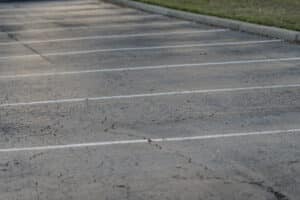
Inspect your lot at least once a year (ideally after winter) to check for fading lines, cracks, or standing water. Re-striping and sealcoating every two to three years helps maintain markings and surface stability.
If you repave, resurface, or reconstruct your parking lot, the ADA generally requires that you re-evaluate and update your accessible features. This means confirming that stall counts, slopes, and signage match the current code. You can’t claim your lot is compliant just because it passed the evaluation in the past.
Trigger Projects
Some types of work automatically require a compliance review, such as:
- Full or partial resurfacing and paving.
- Reconfiguration of parking spaces or drive lanes.
- Installation or modification of ramps and accessible routes.
- Sealcoating and line re-striping for multiple spaces.
Each of these triggers a requirement to verify that accessible stalls, aisles, and paths still meet ADA layout and slope standards.
Recordkeeping and Documentation
Always keep documentation from contractors showing layout plans, slope measurements, and signage specifications. If a complaint or inspection arises, this record shows due diligence and can help you avoid penalties.
Smart Maintenance Tips
- Repaint markings and symbols every 1–2 years.
- Keep signs clear of snow, shrubs, and obstructions.
- Repair cracks before water infiltration worsens grading.
- Inspect slopes after freeze-thaw cycles for shifting or dips.
- Hire paving contractors experienced with ADA compliance and local Utah codes.
By integrating ADA compliance into your long-term maintenance plan, you avoid last-minute headaches and keep your property accessible and welcoming.
Let Superior Asphalt Keep Your Lot ADA Compliant
Staying ADA compliant doesn’t have to be complicated. If you follow the checklist and the layout principles we’ve covered, you’ll protect accessibility for every visitor and reduce the risk of expensive rework or complaints. And you won’t have to do it alone. Need help implementing these asphalt maintenance tips? Superior Asphalt offers expert repair, maintenance, and resurfacing services across Utah. Contact us today for a custom quote!