If you have a pothole, damaged section of pavement, or worn asphalt surface that needs attention, you may have heard the term cold patch asphalt and wondered whether it is the right solution. It is a common repair option, especially when property owners need a practical way to address pavement damage quickly. At the same time, not every asphalt problem should be treated the same way, and cold patch is not always the best long-term answer. In this post, we will break down what cold patch asphalt is, how it works, where it is commonly used, what it does well, how it compares to other repair options, and when property owners should consider a more permanent asphalt repair strategy.
What Is Cold Patch Asphalt?
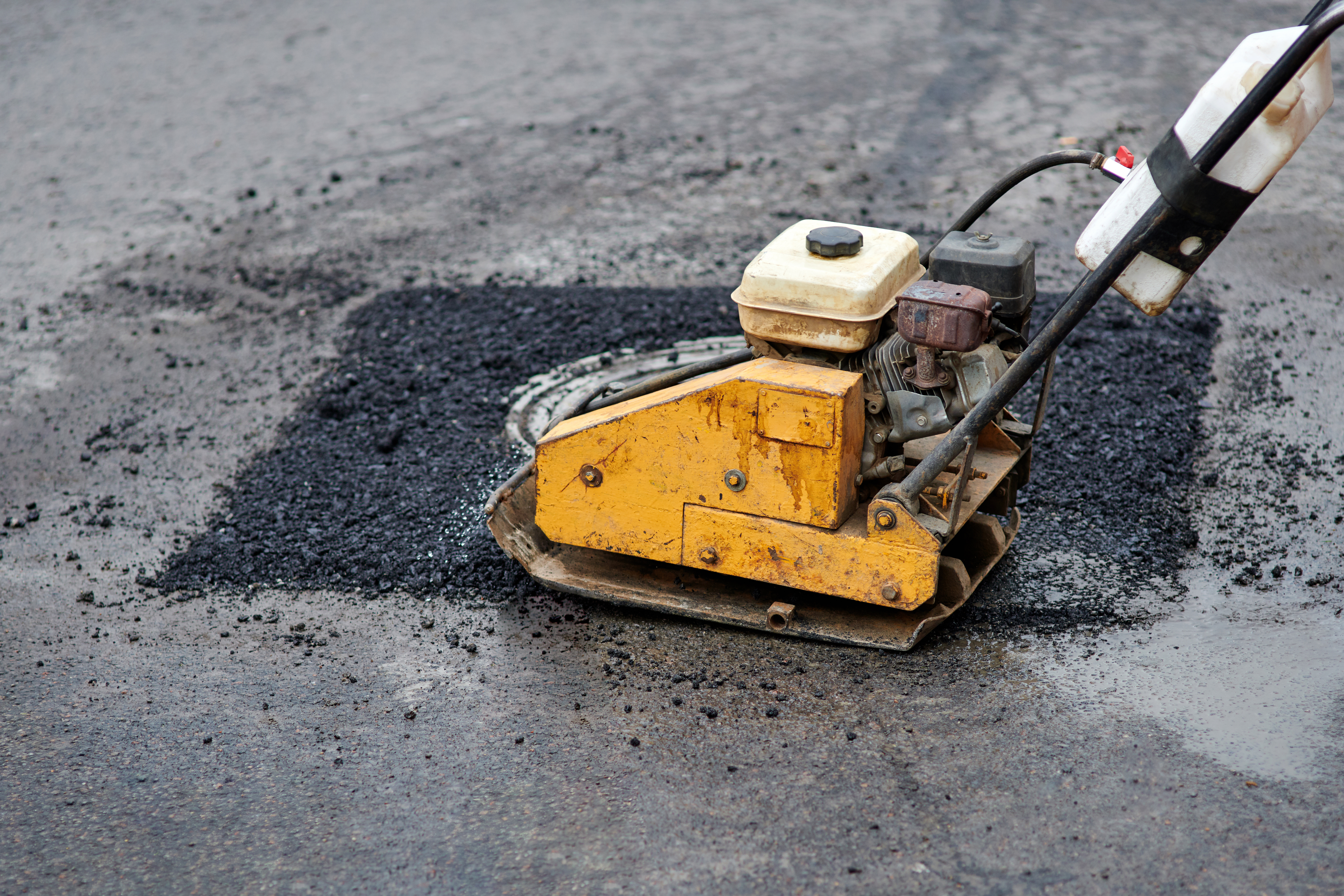
Cold patch asphalt is a ready-to-use asphalt repair material that can be applied without heating. Unlike traditional hot mix asphalt, which requires specialized equipment and high temperatures, cold patch comes pre-mixed and can be used directly from the bag or container. It is designed to be compacted into damaged areas, forming a temporary or semi-permanent repair.
This material contains asphalt binder and aggregates, along with additives that keep it workable at lower temperatures. That flexibility is what makes it so useful. Property owners or maintenance crews can apply it in a wide range of conditions without needing paving equipment.
Cold patch is commonly used because it offers a fast, accessible solution. Instead of waiting for ideal weather or scheduling a full repair project, damaged areas can be addressed quickly. This helps prevent further deterioration, especially when water damage or traffic would otherwise cause the problem to expand. In many cases, acting quickly with a cold patch can stop a small issue from turning into a much more expensive repair later.
What Is Cold Patch Asphalt Used For?
Cold patch asphalt is most often used for potholes and small, localized damage. These issues tend to spread quickly if ignored, so having a quick repair option matters.
Common uses include:
- Pothole repair in driveways, parking lots, and roads
- Small surface failures or worn-out spots
- Crumbling edges along pavement boundaries
- Temporary fixes before a larger paving project
- Off-season repairs when hot mix asphalt is not available
In residential settings, this usually means small driveway repairs that can be handled without heavy equipment. In commercial properties, it helps maintain parking lots and access areas between larger maintenance cycles. It is also frequently used as a temporary solution to stabilize damage until a more permanent repair can be scheduled. While it may not be the final fix, it plays an important role in keeping surfaces safe and functional.
Where Does Cold Patch Asphalt Work Best?
Cold patch asphalt works best when speed and convenience matter more than long-term durability. It fills an important role in maintenance, especially when immediate action is needed to prevent further damage or liability issues.
Residential driveways
Cold patch is a practical choice for minor damage. Homeowners often use it to fill potholes or smooth out small problem areas without committing to a full resurfacing project. It can quickly improve both appearance and usability, making it a good short-term solution.
Commercial parking lots
Cold patch is often part of a broader maintenance strategy. Property managers use it to address developing issues before they create safety concerns or lead to larger repairs. Keeping a parking lot in good condition is not just about appearance—it also affects customer experience and reduces the risk of accidents.
Roads and high-traffic areas
Cold patch is typically used for fast-response repairs. Municipal crews rely on it to quickly fill potholes and reduce hazards. While it is not intended as a permanent fix in these environments, it helps keep roads operational until more durable repairs can be completed.
Colder climates / Off-seasons
Since it does not require heat, it can be applied when hot mix asphalt plants are closed or when weather conditions would prevent traditional paving work. That flexibility makes it a dependable option year-round.
Cold patch asphalt shines in situations where quick, temporary repairs are necessary, and it works with a variety of weather conditions.
How Is Cold Patch Asphalt Different From Hot Mix Asphalt?
Cold patch and hot mix asphalt serve different purposes, and understanding the difference helps property owners choose the right solution.
| Cold Patch Asphalt | Hot Mix Asphalt | |
| Application Temperature | Applied at ambient temperatures (no heating required) | Heated to high temperatures before application |
| Ease of Use | Simple to apply with minimal tools or equipment | Requires specialized equipment and trained crews |
| Convenience | Ready-to-use, can be applied quickly in most conditions | Requires scheduling, transport, and proper weather conditions |
| Typical Use | Temporary or short-term repairs | Permanent repairs and new pavement installations |
| Durability | Less durable, may loosen or degrade over time | Highly durable and designed for long-term performance |
| Compaction | Does not compact as densely | Compacts into a strong, dense surface |
| Traffic Handling | Best for light to moderate traffic areas | Suitable for heavy traffic and high-load areas |
| Seasonal Flexibility | Can be used year-round, including colder conditions | Typically limited to warmer seasons and conditions |
| Cost (Short-Term) | Lower upfront cost for small repairs | Higher upfront cost due to labor and equipment |
| Cost (Long-Term) | May require repeated repairs | More cost-effective over time due to longevity |
Although cold patch and HMA are both types of asphalt, they offer very different solutions, benefits, and drawbacks.
What Are the Limitations of Cold Patch Asphalt?
Cold patch asphalt is useful, but it has clear limitations that property owners should understand before relying on it too heavily.
- Durability:. Compared to hot mix asphalt, cold patch is more likely to wear down over time, especially in areas with frequent or heavy traffic. It may loosen, shift, or require reapplication sooner than a permanent repair would.
- Widespread damage: Cold patch works best when the repair area is small and contained. When structural issues are present or damage covers a larger section, a more comprehensive repair approach is usually necessary to avoid repeated problems.
- Environmental factors: Long-term exposure to freeze-thaw cycles, moisture, and heat can reduce how well the patch holds up. While it can be applied in a wide range of conditions, that does not always translate to long-term durability in those same conditions.
- Surface preparation: Even though cold patch is simple to use, it still performs best when the damaged area is cleaned and properly compacted. Skipping these steps can lead to premature failure and reduce the effectiveness of the repair.
In general, cold patch is best used as part of a broader maintenance strategy. It helps manage damage and extend pavement life, but it should not be seen as a complete replacement for professional repairs when those are needed.
Get a Property-Specific Recommendation from Superior Asphalt
Cold patch asphalt is a practical repair option that can work well for potholes and localized pavement damage in driveways, parking lots, and roads. Its biggest strengths are convenience, speed, and the ability to address a problem before it grows into something more serious. At the same time, not every damaged surface should be treated the same way, and some asphalt problems call for a more durable professional repair or a broader maintenance plan. The key for property owners is understanding where cold patch fits, what it does well, and when it makes sense to bring in an experienced asphalt contractor. Here at Superior Asphalt, we provide asphalt repair, patching, crack sealing, and maintenance services for residential and commercial properties, with a focus on helping property owners protect pavement life and avoid bigger repair costs. Contact us today for a recommendation or quote!