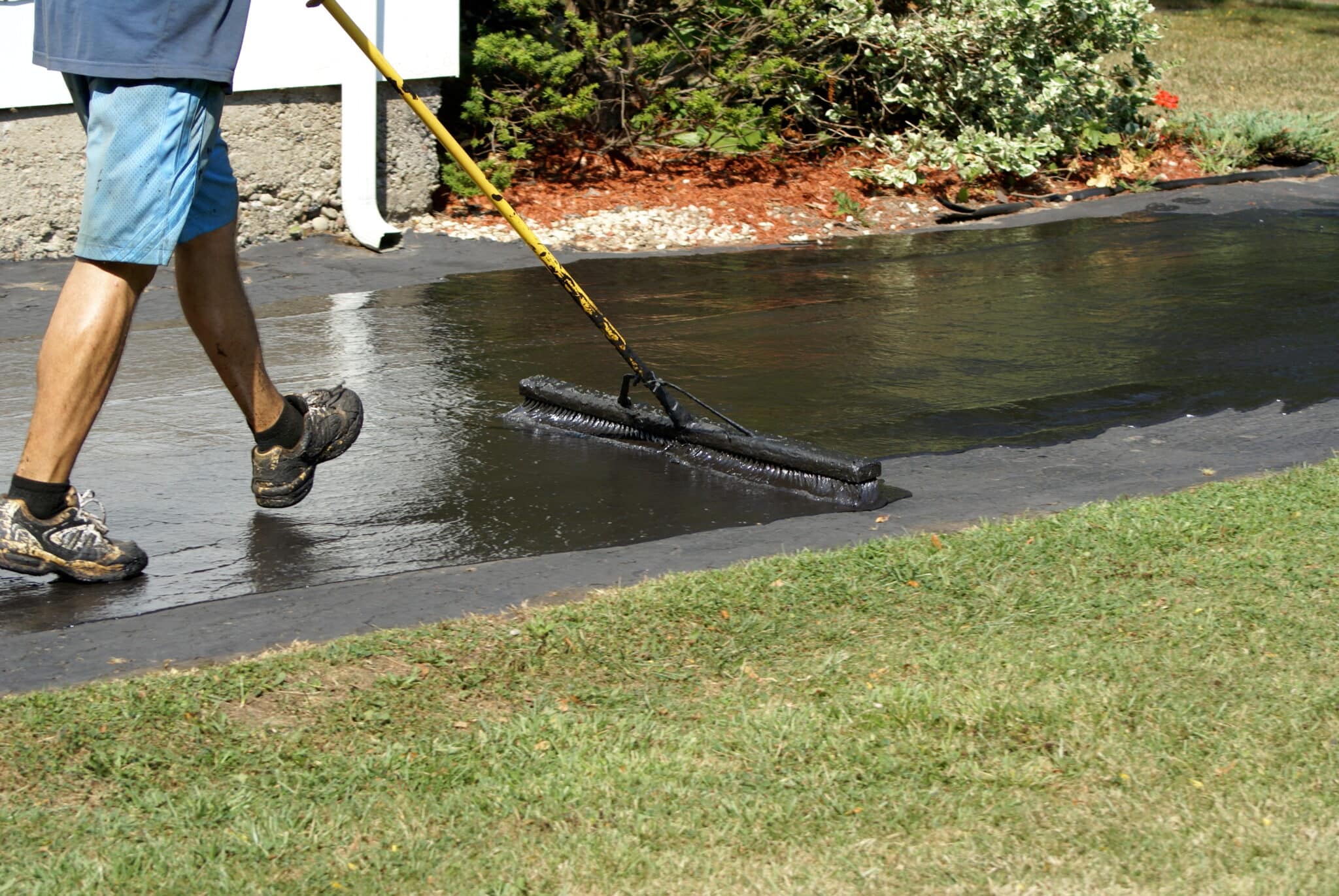
If you’re thinking about sealing your driveway, one of the first questions that probably comes to mind is, “How long is this going to take?” It’s a fair question. After all, sealing isn’t just about the time you spend applying the product; it also includes drying, curing, and knowing exactly when it’s safe to walk or drive on the surface again. Get the timing wrong and you could end up with a patchy finish, reduced protection, or even have to redo the work entirely. In this post, we’ll walk you through the full timeline for sealing a driveway, from the prep work before you open the first bucket to the moment you can safely pull your car back in. We’ll break down the differences between professional and DIY applications, explain how weather and surface conditions can speed things up or slow them down.
Why Timing Matters When Sealing a Driveway
Timing isn’t just a matter of convenience—it directly impacts the effectiveness and durability of a sealcoat application. If you rush the process, you risk trapping moisture, creating uneven coverage, or leaving soft spots that wear down quickly. On the other hand, if you wait too long between cleaning, sealing, and drying, dirt and debris can stick to the surface and compromise the finish.
For example, if a car is parked on a driveway too soon after sealing, the weight of the tires can pull the sealer up. This mistake leaves (sometimes permanent) marks and damages the protective barrier. In some cases, entire sections may peel or flake away, which not only looks bad but also shortens the lifespan of the surface. Damage of this level forces you to reseal much sooner than planned.
Protection
Sealing a driveway is a protective measure. To perform as intended, the sealer needs time to settle and bond with the surface before it cures into a hard, durable shield. That shield combats oil leaks, water infiltration, UV damage, and the freeze-thaw cycles that cause cracks. If the sealer doesn’t set correctly, all of these protective benefits are weakened.
Important Considerations
Planning also helps to navigate your daily routine. Since you won’t be able to park on your driveway for at least 24–48 hours, timing the project around your schedule is key. You should also consider the time of year; spring and early summer are usually favored. Families often plan sealing projects over weekends or during vacation to minimize the inconvenience.
When working out the timing for a sealcoat application, you have to factor in all the steps. This ranges from preparation to the fully cured sealant, and everything in between.
How Long Does It Actually Take to Seal a Driveway?
The short answer: sealing a driveway usually takes between 4 and 12 hours for the actual application and initial drying, but the complete process from prep to final curing may span two to three days.
Here’s a general breakdown:
- Preparation: 1–3 hours, depending on the size and condition of the driveway. This includes cleaning and filling cracks.
- Application: 2–4 hours for a standard two-car driveway. Larger driveways may take longer, especially with DIY methods.
- Drying to Touch: 4–12 hours, depending on temperature and humidity. At this point, it may look dry but is not ready for use.
- Curing: 24–48 hours before you can safely drive on it. Walking is usually allowed after about 24 hours, but heavy loads should be avoided until fully cured. If you want to be extra careful, wait 72 hours.
One factor often overlooked is the difference between asphalt and concrete driveways. Asphalt is more porous and readily absorbs sealer, so curing is typically on the faster end of the spectrum. Concrete, by contrast, may need additional drying time due to its density. Sealants designed for concrete also often specify longer curing periods.
This means even a small driveway sealing job is at least a two-day commitment when factoring in drying and curing times.
What Factors Affect the Time It Takes to Seal a Driveway?
Several variables can speed up or slow down the project.
- Weather: Temperature and humidity are the biggest factors. Sealant cures best between 55°F and 90°F, with low humidity and no rain. Cooler temperatures or damp conditions can add a full day or more to curing.
- Surface Condition: If your driveway has many cracks or oil stains, prep time increases significantly. Filling cracks and allowing patch materials to dry adds hours to the process.
- Type of Sealer: Different sealers have different drying times. Asphalt-based emulsions may dry faster than coal tar, while eco-friendly formulas can take longer to cure.
- Number of Coats: Some jobs require two coats for full protection, which doubles application and drying time.
- Driveway Size: A single-car driveway may only take a few hours, while large residential or commercial lots can take a crew multiple days.
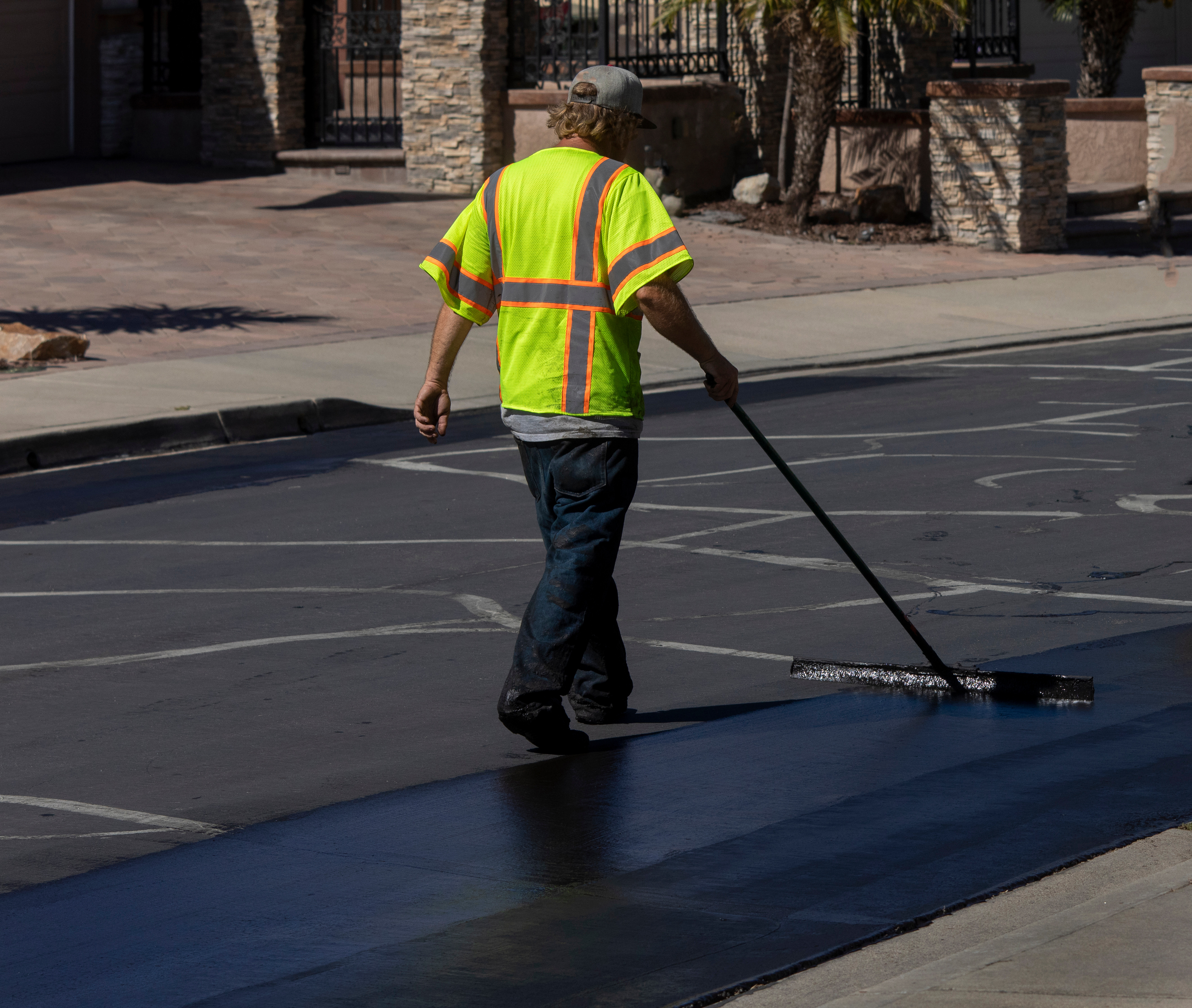
- DIY vs. Professional Tools: Professionals often use sprayers and squeegee machines that apply sealant more evenly and quickly than DIY rollers or brushes.
There are many factors at play during a sealcoat application, and not every project takes the same amount of time. To avoid longer application and curing times, plan to repair any damage, clean the surface, and schedule a time with favorable weather conditions.
Professional vs DIY: Which Is Faster?
Professional and DIY applications vary considerably, but both options offer attractive benefits. Here’s a side-by-side breakdown of each method:
| Professional Crew | DIY Homeowner | |
| Speed | 2× faster due to sprayers, blowers, and crew size | Slower; usually takes a full weekend |
| Finish Quality | Smooth, even coverage | Prone to streaks or thin spots |
| Cost | Higher (labor + materials) | Lower upfront but risky if mistakes are made |
| Risk of Errors | Low — experts handle timing and weather | Higher — misjudging drying time may call for a redo |
| Convenience | Minimal disruption; crew handles setup/cleanup | You manage prep, application, cleanup, and blocking off the area |
If speed is your top priority, professionals almost always win. A professional crew can typically clean, edge, and apply sealer to a standard driveway much quicker than it would take a homeowner. Their use of commercial-grade sprayers and blowers not only speeds up the process but also creates a more consistent finish.
DIY applications, on the other hand, may be more affordable but are rarely quicker. You’ll have to deal with renting or buying tools, waiting for patch materials to set, and applying the sealer by hand. Drying and curing times don’t change between DIY and professional applications, but professionals are better at timing correctly for weather conditions, which can save you from costly mistakes.
For Worry-Free Sealcoating Jobs, Contact Superior Asphalt
Sealing your driveway is more than a quick afternoon project. The process involves thorough preparation, careful application, and enough drying and curing time to ensure the finish is both attractive and durable. Factors like weather, the type of sealer, and the condition of your driveway all influence the timeline. By planning ahead and allowing the surface to fully set, you give your driveway the best chance to stay protected and looking great for years. At Superior Asphalt, we know the ins and outs of sealcoating. With years of experience and a commitment to quality, we’ve seen how the right approach can make a lasting difference. Contact us today for a property-specific quote.