As a business owner or property manager, you understand the importance of asphalt sealing. It’s one of the most effective ways to protect your pavement from the elements and extend its lifespan. However, timing is crucial when it comes to sealing new asphalt. Many people mistakenly seal it too soon, which can reduce its effectiveness. In this blog post, we’ll discuss the optimal time to seal new asphalt and explain why waiting is essential for achieving the best results.
The Importance of Sealing New Asphalt
Any property owner knows that a strong, smooth asphalt surface is essential for a well-maintained parking lot or driveway. Asphalt not only provides a durable surface for vehicles and pedestrians, but it also has a relatively low cost of maintenance.
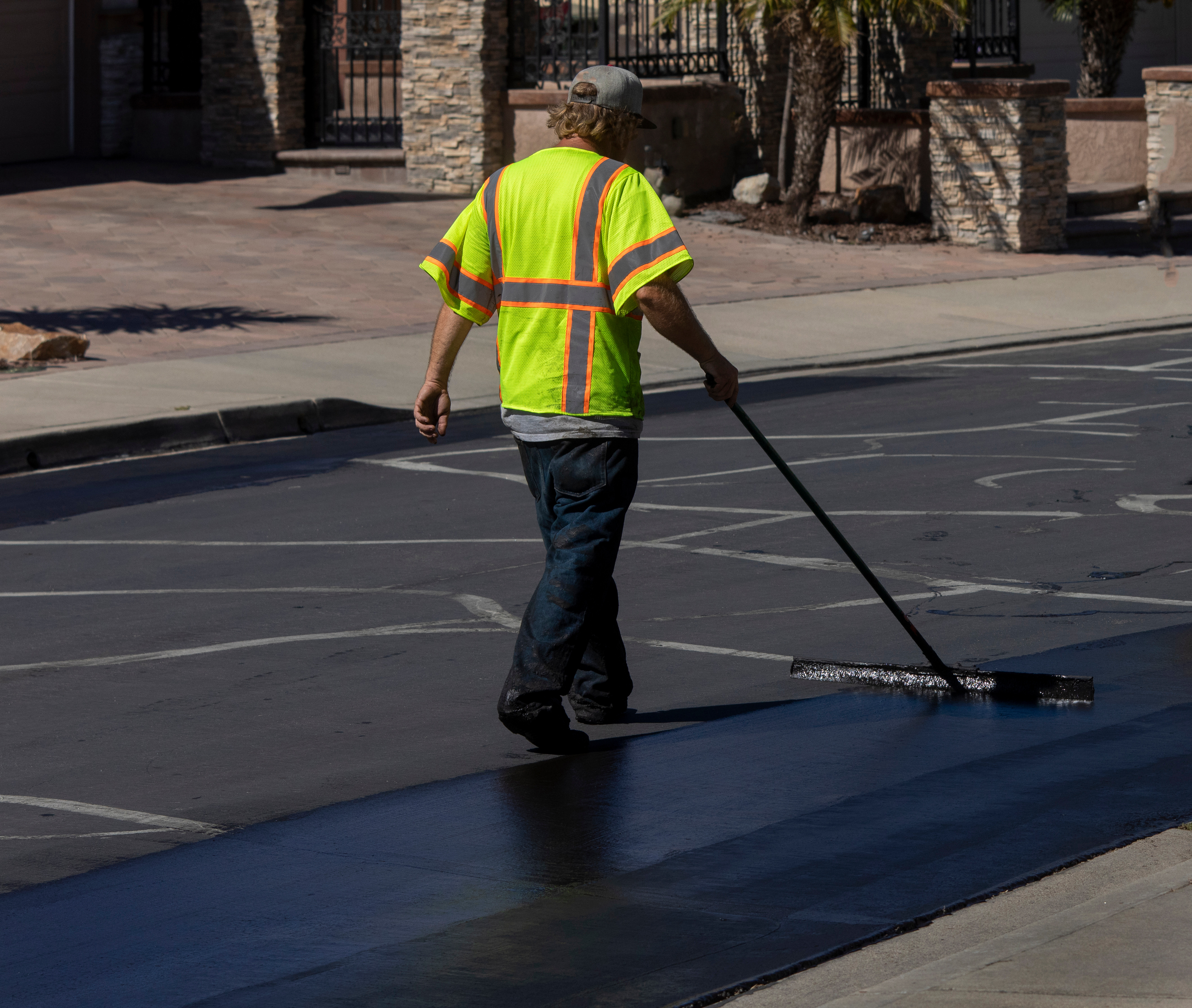
When you seal new asphalt, you create a protective barrier between the bitumen and the elements. Sealing asphalt helps prevent moisture damage, which can lead to cracking and potholes. It also protects against UV damage and staining from oil and gas spills. Additionally, sealing fills in small voids and irregularities, creating a smoother surface that reduces the risk of accidents.
By sealing new asphalt, you can prolong its lifespan and maintain its appearance for years to come. Investing in asphalt sealing ensures your pavement remains in excellent condition, providing both functionality and aesthetic appeal.
When to Seal New Asphalt — the “magic window.”
Asphalt driveways add curb appeal and value to a home, so keeping them in good condition is important. One way to do this is by regularly sealing the asphalt. However, it’s important to know when to seal a new driveway.
New asphalt takes time to cure, enabling it to harden and for the oils within the asphalt mix to evaporate. This process usually takes approximately 6 to 12 months, depending on the climate, the thickness of the asphalt, and the mix used. During this period, the asphalt is still soft, and sealing too soon will lock in the oils in the pavement, preventing proper hardening.
This sets up the potential for a spongy surface that is easily damaged by traffic and weather through such means as cracking, chipping, and wear.
The best time to seal asphalt is after it has fully cured. When it has cured, the surface area goes from shiny black to a matte finish. This means the oils have evaporated, and the asphalt is now ready for application of the sealant. In this stage, it will protect the pavement from water, UV damage, oxidation, and all of those other types of wear and tear caused by daily use that causes it to crack and deteriorate. While 6 to 12 months is a general guideline, one should also take into consideration what the weather is generally like in your area. For places where the climate is rather warm, the heat tends to cure the asphalt faster; hence, sealing may be appropriate closer to the 6-month mark. But in cooler or even more temperate regions, it’s often best to wait closer to a year.
Application would be advised over 50°F, preferably during spring or early summer for adequate curing to occur along with bonding to the asphalt surface.
For the best result, the surface should always be checked for any sign of readiness, such as its matte finish, and cleaned before applying the sealant. Any dirt, debris, or oil spills should be removed to provide room for an even and smooth application. Not doing so compromises this treatment process with an uneven seal that might leave some areas of the asphalt exposed to the elements. Timing is everything when sealing new asphalt in terms of adding durability to your investment.
Why You Must Wait to Seal New Asphalt
As we mentioned earlier, it’s important to wait at least six months before sealing new asphalt. But why is this?
If you seal new asphalt too soon, the bitumen won’t have had enough time to cure and bond with the aggregate. This can cause the sealer to peel or flake off, leaving your pavement vulnerable to damage. In addition, if you seal new asphalt when it’s too cold outside, the sealer will not be as effective. It’s important to wait until the temperature is above 50 degrees Fahrenheit so that the sealer can properly adhere to the surface.
Read more: When is the Best Time of Year to Sealcoat?
What Happens if You Don’t Seal New Asphalt?
Skipping the sealcoating step after laying new asphalt may not seem like a big deal—but over time, it can lead to serious problems. Without proper sealing, asphalt is exposed to the elements and will gradually dry out, becoming brittle and prone to cracking. Eventually, this can result in potholes, surface degradation, and fading of the rich black color that makes new pavement look clean and professional.
Sealing acts as a protective barrier that shields your asphalt from moisture, UV rays, automotive fluids, and daily wear. When applied within the recommended time frame, a quality sealant helps preserve the integrity of the pavement, reduces the risk of damage, and enhances curb appeal.
More importantly, sealing your asphalt early can save you from expensive repairs down the road. It’s a simple step that plays a big role in extending the lifespan of your driveway or parking lot while keeping it looking its best for years to come.
How Often Should You Seal Asphalt?
Generally, asphalt should be sealed every two to three years to maintain a strong, flexible surface that resists cracking, fading, and water intrusion. However, the ideal frequency depends on several factors, including climate, traffic volume, and the quality of your last sealcoat.
In regions like Utah, where summers are hot and winters bring freeze-thaw cycle, your asphalt endures more stress throughout the year. These temperature fluctuations cause expansion and contraction, which can accelerate surface wear. In such climates, resealing every two years is typically recommended to prevent small cracks from developing into costly repairs.
On the other hand, driveways or parking lots in milder climates with light traffic can often go up to five years between applications. A simple way to tell if your asphalt needs resealing is to look at its color and texture: when it fades to a dull gray and loses its smooth, water-resistant finish, it’s time to schedule another sealcoat.
Consistent sealing not only extends your pavement’s lifespan but also enhances its appearance and helps repel oil, salt, and UV damage. For the best results, always start with a clean, dry surface and choose a high-quality sealant designed for your specific conditions.
Read more: How Often Should You Seal Coat Your Driveway
The Bottom Line
Overall, sealing your new asphalt is a crucial step in protecting it and ensuring that it lasts for as long as possible. You can contact us to find out more about when the best time to seal new asphalt is in your area or to get a quote for our services. We want to help you take care of your pavement, so it can take care of you for years to come.
Frequently Asked Questions
When should you seal new asphalt?
New asphalt should be sealed 6 to 12 months after installation. This curing period allows the asphalt to harden and for the oils to evaporate. Sealing too soon can trap those oils, resulting in a soft, easily damaged surface. The asphalt is ready for sealing when it loses its shiny black appearance and takes on a matte finish.
What is sealcoating?
Sealcoating is the process of applying a protective layer over asphalt surfaces to shield them from weather, moisture, UV rays, oil spills, and general wear. It helps prevent cracking, fading, and deterioration while extending the life of the pavement. Sealcoating is typically done every 2–3 years as part of regular asphalt maintenance.
What happens if you seal asphalt too soon?
Sealing asphalt too early prevents it from curing properly, which can cause the sealant to peel or flake off. This leaves the surface vulnerable to damage from water, UV rays, and vehicle traffic. Inadequate curing can also result in a spongy, less durable surface that deteriorates faster under pressure.
What if you don’t seal your new asphalt at all?
If you skip sealcoating altogether, the asphalt is left exposed to the elements. Over time, this exposure can cause it to dry out, crack, and develop potholes. UV rays, moisture, and chemical spills will accelerate deterioration, reducing both the lifespan and appearance of your pavement—and leading to costly repairs down the line.